
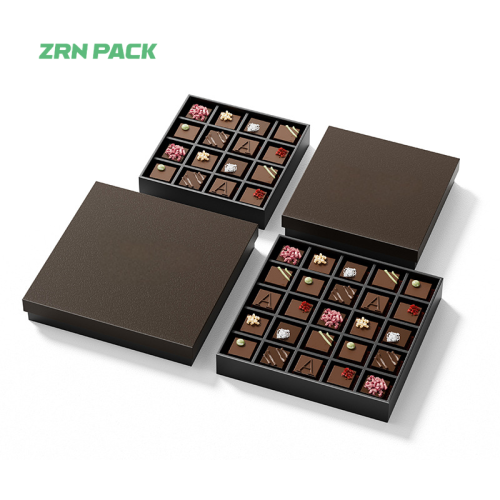
Your products deserve VIP treatment, but they keep arriving in boxes that scream “budget moving day,” not “premium unboxing moment.” No drama, just flaps, dents, and customers wondering if you ordered packaging from the bargain bin.
Custom two piece rigid boxes fix that, using sturdy structure, snug lids, and luxury finishes to protect and impress. Research on packaging and perceived value supports this upgrade here, helping you turn every delivery into a brand event.
📦 Structural Anatomy of Custom Two Piece Rigid Boxes
Custom two piece rigid boxes work through a tight lid-and-base structure that protects products, supports branding, and delivers a premium unboxing moment for customers.
This simple but strong structure lets brands present food, gifts, or luxury items safely, while the large printable area helps tell a clear and consistent story.
1. Base Tray for Core Product Support
The base tray holds and centers the product, keeping it steady in storage and transit.
- Built from thick grayboard or chipboard
- Often paired with custom inserts for fragile items
- Helps control stacking strength and load capacity
2. Lid Structure and Overlap Depth
The lid slides over the base with a planned overlap that controls both strength and opening feel.
| Overlap Depth | Main Benefit |
|---|---|
| Short | Fast access, lighter look |
| Medium | Balanced grip and protection |
| Deep | Maximum stability and premium feel |
3. Outer Wrap and Branding Surface
The printed wrap covers the rigid board, hiding edges and adding smooth color, texture, and protection.
- Supports high-resolution graphics and logos
- Can use matte, gloss, or soft-touch films
- Improves scratch and moisture resistance
4. Functional Add-ons and Special Structures
Designers can add windows, sleeves, or dividers to control how products appear when the box opens.
- Transparent windows for food boxes and gifts
- Multi-layer cavities for sets or assortments
- Fits concepts like the ZRN Custom Paper Packaging Base and Lid – Holiday Gift Set Box
🧱 Material Composition and Its Effect on Protection and Presentation
Material choice shapes how a two piece rigid box protects products, resists pressure, and presents printed colors and textures on the outside.
By adjusting board thickness, paper type, and eco coatings, brands balance toughness, cost, and environmental impact for food, gifts, or retail packaging.
1. Core Board Thickness and Compression Strength
Rigid board thickness directly affects stacking strength, edge crush resistance, and perceived quality.
| Board Thickness | Typical Use |
|---|---|
| 1.5 mm | Small gifts and light items |
| 2.0 mm | Standard retail products |
| 2.5–3.0 mm | Luxury and heavy items |
2. Paper Wrap Types for Visual Impact
Art paper, kraft paper, and specialty papers change color clarity, print sharpness, and tactile feel.
- Art paper: bright color, smooth finish
- Kraft paper: eco look, natural tone
- Textured papers: luxury and strong touch
3. Food-Grade and Eco-Friendly Options
For direct or indirect food contact, certified food-grade materials and safe inks are essential for compliance and consumer trust.
- Water-based or soy-based inks
- Food-safe barriers and coatings
- Examples like ZRN Eco-Friendly Bakery Kraft Cookie Boxes – Food Grade Custom Packaging
4. Coatings, Laminations, and Durability
Surface finishes protect prints from scuffs, fading, and handling damage while shaping gloss level and touch.
- Gloss lamination for bright color and shine
- Matte lamination for soft, premium look
- Spot UV to highlight brand marks and text
🎯 Precision Sizing and Fit Between Base and Lid Components
Accurate sizing between lid and base controls friction, stability, and the smooth slide customers feel when they open the box.
Manufacturers use tight cutting tolerances so lids neither wobble nor jam during packing, shipping, or retail display.
1. Tolerance Control for Smooth Sliding
Engineers set a gap just large enough to move, but small enough to feel secure.
| Fit Type | Experience |
|---|---|
| Tight | Slow, premium pull |
| Standard | Balanced opening and closing |
| Loose | Fast access, less premium |
2. Size Planning for Product and Inserts
Internal dimensions must match both the product and any foam, card, or paper inserts.
- Measure maximum product length, width, and height
- Add space for inserts and wrapping
- Allow clearance for easy removal
3. Stackability and Shelf Efficiency
Consistent outer dimensions allow clean stacking on pallets, shelves, and in storage rooms.
- Optimized for standard shipping cartons
- Predictable footprint on retail shelves
- Reduced damage from box slippage
🛠️ Customization Processes for Printing, Finishing, and Inserts by ZRN Packaging
ZRN Packaging tailors printing, finishing, and inserts so each two piece rigid box matches your brand image and product needs.
These custom steps turn a simple base-and-lid design into a complete marketing and protection tool.
1. Color Management and Brand Printing
ZRN uses CMYK and Pantone systems to keep logos, icons, and illustrations consistent across repeated runs.
- Offset and digital printing options
- Color proofs before mass production
- Sharp details for fine patterns and text
2. Premium Finishes and Sensory Upgrades
Finishing choices guide how the box looks and feels in the shopper’s hands.
| Finish | Key Effect |
|---|---|
| Foil stamping | Metallic logos and accents |
| Emboss / deboss | Raised or recessed textures |
| Soft-touch | Velvety, high-end feel |
3. Smart Inserts for Food, Gifts, and Sets
Custom inserts secure each item, guide layout, and support themed designs like festive cookie or gift collections.
- Die-cut paperboard, foam, or pulp trays
- Segmented cavities for assortments
- Seasonal ideas as seen in ZRN Color Printing Christmas Gingerbread Man Cookie Packaging Box – Festive Food Grade Box
🔄 Operational Workflow from Design Concept to Final Box Assembly
The working principle of custom two piece rigid boxes follows a clear path from idea to finished, packed product.
Each step refines structure, graphics, and fit so the final box is accurate, protective, and visually on-brand.
1. Briefing, Concept, and Structural Design
Brands share product details, target users, and budget, while packaging engineers design dielines and choose board thickness.
- 3D mockups to preview lid and base fit
- Early decisions on materials and finishes
- Design files set with bleed and safe zones
2. Prototyping, Testing, and Refinement
Sample boxes verify size, lid friction, and print accuracy before mass production.
| Test Type | Focus |
|---|---|
| Fit test | Lid-base glide and stability |
| Drop test | Product safety after impact |
| Color check | Brand color accuracy |
3. Mass Production, Packing, and Delivery
After approval, ZRN cuts boards, wraps them, adds inserts, and assembles or ships flat, based on client needs.
- Quality checks at cutting, wrapping, and gluing
- Bulk or retail-ready packing options
- Timing aligned with launch or seasonal dates
Conclusion
Custom two piece rigid boxes work by pairing a strong base, accurate lid fit, and tailored materials to protect and present products.
With careful design, precise sizing, and expert finishing from partners like ZRN Packaging, these boxes become powerful branding tools and reliable shipping solutions.
Frequently Asked Questions about custom two piece rigid boxes
1. What makes two piece rigid boxes different from regular folding cartons?
Two piece rigid boxes use thick, non-collapsible board, giving stronger protection and a premium feel. Folding cartons are lighter, cheaper, and fold flat but feel less luxurious.
2. Can I use custom two piece rigid boxes for food products?
Yes, as long as you choose food-grade materials, inks, and coatings. Many bakeries and confectioners use rigid boxes for cookies, chocolates, and festive treats.
3. How long does it take to develop a custom two piece rigid box?
Lead time depends on design complexity and order size. A typical project runs from two to six weeks, including design, sampling, and mass production.
4. Are eco-friendly options available for these boxes?
Yes. You can choose recycled board, kraft papers, and water-based coatings. These options reduce environmental impact while keeping the box strong and visually appealing.
5. What information should I prepare before requesting a custom quote?
Prepare product dimensions, target quantity, desired materials, printing needs, and any special inserts or finishes. Clear details help the supplier design accurate and cost-effective boxes.

ZRN Packaging - Byron Lin
Meet Byron Lin, our Senior Packaging Specialist.